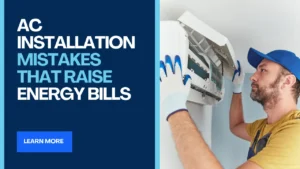
High energy bills often come from mistakes during air conditioner installation, not the units themselves. Problems like wrong sizing, poor placement, refrigerant issues, leaky ducts, and bad airflow can make AC systems work too hard. Professional installation boosts efficiency, cuts costs, extends the system’s life, and keeps indoor spaces comfortable.
When you install a new air conditioning system, it should lower energy use, improve comfort, and cut operating costs. But many property owners face higher bills due to simple installation errors.
Whether you own a home, office, shop, restaurant, warehouse, or other commercial space, poor AC installation can raise your electricity usage. Even top-quality units can underperform if installed incorrectly.
Knowing common AC installation mistakes can help you avoid extra costs and ensure your system runs efficiently as intended.
Why Proper AC Installation Matters More Than Most People Realise
Many people think that how energy-efficient an air conditioner is depends only on the brand or model. While the quality of the equipment matters, how well it’s installed often matters even more.
A properly installed system meets the manufacturer’s guidelines. It cools rooms efficiently, keeps temperatures steady, and uses less electricity. In contrast, mistakes in installation make the system work harder, leading to more wear and higher energy costs.
For instance, a high-efficiency air conditioner with poor airflow or incorrect refrigerant levels can use much more electricity than a standard unit that is installed correctly.
That’s why it’s just as important to choose an experienced installer for air conditioning in Birmingham as it is to pick the right system.
Definition: What Are Air Conditioning Installation Errors?
Air conditioning installation errors happen when the system is designed, sized, or set up incorrectly. These mistakes can lower efficiency, performance, and reliability.
These errors can cause:
- Higher energy bills
- Uneven cooling
- More breakdowns
- Shorter equipment life
- Less comfort indoors
The Most Expensive Mistake: Choosing the Wrong Size AC Unit
One common mistake in air conditioning installation is choosing the wrong size unit. Many people think that bigger systems cool better. However, oversized units often lead to efficiency issues.
Oversized Units
An oversized air conditioner cools a room too fast and turns off before finishing its cooling cycle.
This leads to:
- Frequent start-stop cycles
- Higher electricity bills
- Poor humidity control
- More wear on parts
Undersized Units
An undersized system has different problems. It runs all the time trying to reach the right temperature, but can’t. This leads to:
- Constant operation
- Higher electricity bills
- Early breakdowns of parts
- Less comfort
Correct Sizing Requires Professional Assessment
Proper sizing should include:
- Room size
- Ceiling height
- Insulation quality
- Number of people
- Window direction
- Heat-producing equipment
Skipping this assessment can cause long-term problems with high AC energy bills.
Poor Unit Placement Can Quietly Increase Running Costs
Many homeowners care about how their air conditioning unit looks inside, but often ignore how well it works. The placement of the unit is crucial for its efficiency.
Indoor Unit Positioning Errors
Indoor units placed behind furniture, near heat sources, in corners with bad airflow, or too close to ceilings can’t spread cool air well. This leads to uneven temperatures and longer run times.
Outdoor Unit Positioning Errors
Outdoor condensers need good airflow to cool down.
Issues arise when outdoor units are:
- In direct sunlight
- Too close to the walls
- Surrounded by plants
- In tight spaces
Poor airflow leads to higher pressure and more energy use.
Professional air conditioning installers in Birmingham check both indoor and outdoor setups before starting the installation.
Incorrect Refrigerant Charging: A Hidden Energy Drain
Refrigerant moves heat in an air conditioning system. One common mistake in HVAC installation is not charging the refrigerant correctly.
Too Little Refrigerant
Low refrigerant levels make compressors work harder. This can lead to:
- Longer cooling times
- Higher energy costs
- Less effective cooling
- Damage to the compressor
Too Much Refrigerant
Overcharging is a big issue. Too much refrigerant can:
- Raise system pressure
- Lower efficiency
- Lead to overheating
- Damage parts inside
Even small mistakes in charging can noticeably increase yearly energy costs.
Leaking Ductwork Wastes Cooled Air and Money
Ductwork quality impacts efficiency in ducted systems. Badly sealed ducts are a main reason for inefficient air conditioning.
How Duct Leaks Affect Energy Bills
When cold air escapes into attics, wall spaces, or empty areas, the system has to work harder. This can lead to significant energy loss over time.
Common causes are:
- Poor sealing
- Damaged ducts
- Loose connections
- Old insulation
Signs of Duct Leakage
Check for:
- Rooms that are cooling unevenly
- Long running times for the system
- Higher energy bills
- Weak airflow from vents
Fixing duct problems usually leads to quick improvements in efficiency.
Poor Electrical Installation Creates Long-Term Efficiency Problems
Electrical connections might be hidden after installation, but they greatly impact how well the system works.
Poor electrical work can harm:
- Compressor operation
- Fan performance
- System safety
- Energy efficiency
Common Electrical Installation Errors
Here are the main points:
- Incorrect cable sizing
- Loose connections
- Poor circuit protection
- Voltage imbalance
When electrical supply problems happen, motors and compressors use more electricity but provide less cooling.
Professional installation meets UK electrical standards and helps maintain efficiency.
Airflow Problems That Make Your AC Work Harder
Airflow is key to good cooling. Modern systems can still lose efficiency if airflow is limited.
Common Airflow Mistakes
Installers sometimes miss:
- Blocked return air pathways
- Wrong vent placement
- Inadequate ventilation
- Poor diffuser choices
These problems make the systems run longer to reach the right temperatures.
Signs of Airflow Issues
You may see:
- Hot and cold areas
- Weak airflow
- Longer running times
- Less comfort
Good airflow design is important for commercial air conditioning in Birmingham, where large spaces need even air distribution.
Failing to Insulate Pipework Properly
Refrigerant pipe insulation is a small part of the installation, but it can greatly affect efficiency. If the insulation is not done right, refrigerant lines take in heat from their surroundings.
What Happens When Pipe Insulation Is Missing?
The system must get rid of extra heat before it can cool. This causes:
- More work for the compressor
- Lower cooling efficiency
- Higher electricity bills
Poor insulation can cause condensation and moisture damage. A professional installation ensures that refrigerant pipes are properly insulated.
Skipping System Commissioning and Performance Testing
Many installation problems happen because systems are not fully tested and set up.
What Is AC Commissioning?
Commissioning means testing each part to make sure it works well before it is handed over.
Typically, checks include:
- Refrigerant pressures
- Airflow measurements
- Electrical readings
- Temperature performance
- Control settings
Without proper commissioning, problems can go unnoticed until energy bills rise.
Commissioning ensures systems work as intended from the start.
Common Warning Signs of Poor AC Installation
Many property owners ignore problems with installations because they don’t see the warning signs.
Poor AC Installation Signs
Watch for:
| Warning Sign | Possible Cause |
| High energy bills | Incorrect sizing |
| Uneven cooling | Poor airflow |
| Constant operation | Undersized unit |
| Frequent cycling | Oversized unit |
| Weak airflow | Duct or vent issues |
| Excessive noise | Installation faults |
| Humidity problems | Incorrect system setup |
| Repeated breakdowns | Multiple installation errors |
Finding problems early can help avoid costly repairs and high electricity bills.
Real-World Example: When Cheap Installation Becomes Expensive
A retail shop owner picks the cheapest installation quote.
The contractor installs an oversized system without checking the cooling needs. At first, the shop feels cool, but within months:
- Energy bills skyrocket.
- Customers complain about temperature changes.
- The compressor starts to wear out.
An inspection shows the system was 40% too large. In the end, the owner spends more fixing the mistakes than they would have if they had hired a professional from the start.
This situation shows that you shouldn’t base installation quality solely on price.
Expert Tips to Reduce AC Energy Bills After Installation
You can still improve efficiency, even if your system is installed.
Practical Energy-Saving Tips
- Schedule yearly maintenance.
- Change filters regularly.
- Keep outdoor units clear.
- Seal air leaks around doors and windows.
- Use programmable thermostats.
- Check refrigerant levels often.
- Make sure ductwork is sealed well.
- Watch for unusual spikes in electricity use.
Small adjustments often create meaningful savings over time.
Step-by-Step Guide to Choosing the Right Installer
To avoid mistakes in AC installation that increase energy bills, start by choosing the right contractor.
Step 1: Verify Experience
Pick installers who have strong experience in both home and business systems.
Step 2: Request a Site Survey
Stay away from companies that give quotes without checking the property first.
Step 3: Ask About Load Calculations
Professional sizing calculations are important.
Step 4: Review Previous Projects
Check customer reviews and case studies.
Step 5: Confirm Commissioning Procedures
Ask how the system will be tested after it’s installed.
For dependable air conditioning installation in Birmingham, proper planning and installation are the best ways to ensure efficiency.
People Also Ask
What installation mistake increases AC energy bills the most?
Incorrect system sizing often leads to high energy bills because it causes the system to cycle too much or run continuously.
Can poor AC installation increase electricity consumption?
Yes. Installation errors like wrong refrigerant levels, bad airflow, and leaking ducts make the system work harder and use more electricity.
How can I tell if my air conditioner was installed incorrectly?
Common signs include uneven cooling, higher energy bills, loud noises, frequent cycling, and less comfort.
Does AC placement affect efficiency?
Absolutely. Bad placement can block airflow, expose equipment to too much heat, and lower system performance.
How often should an air conditioning system be serviced?
Most systems should be serviced by a professional at least once a year. This keeps them running well and helps find problems early.
Is a larger air conditioner more efficient?
Not always. Large systems can waste energy by turning on and off too often and not controlling humidity well.
Can duct leaks really raise energy bills?
Yes. Leaking ducts let conditioned air escape before it reaches living areas, which raises operating costs a lot.
The Cheapest Installation Often Costs the Most
Many property owners focus on equipment costs but forget how important good installation is. Most long-term AC energy bill issues come from installation errors, not equipment failures.
Mistakes like wrong sizing, refrigerant problems, airflow blockages, bad positioning, and electrical issues can quietly raise costs over time.
Investing in professional installation keeps you comfortable, lowers energy bills, boosts reliability, and extends your air conditioning system’s lifespan.
If you’re planning a new installation or think your current system has installation problems, UK Freez Solutions can help. We offer expert assessments, professional installation, and ongoing maintenance for energy-efficient cooling in homes and businesses across Birmingham.