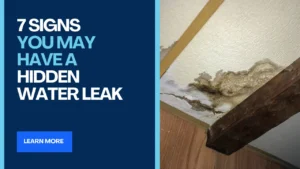
A hidden water leak may be present if your water bill suddenly increases, damp spots appear, mould keeps coming back, water pressure drops, or you hear water running when nothing is turned on. You might also notice your water meter moving when no water is being used. Finding the leak early can save your property and prevent wasted water.
Hidden leaks are easy to overlook because the water often escapes behind walls, under floors, above ceilings, or underground instead of forming visible puddles.
Knowing the signs of hidden water leaks can help you take action before the problem worsens and damages floors, walls, or electrical systems.
What Are the 7 Signs of a Hidden Water Leak?
Common signs of hidden water leaks include:
- A sudden rise in your water bill
- Damp, stained, or bubbling walls and ceilings
- Constant mould or musty smells
- Unexplained loss of water pressure
- The sound of running or dripping water
- Changes in flooring, skirting boards, or plaster
- Your water meter still running when no water is being used
WaterSafe also highlights damp patches, mould, pressure loss, unusual plant growth, and a steady sound of water as additional signs of a leak.
One sign alone may not mean there’s a leak, but several signs together suggest it’s time to investigate.
What Exactly Is a Hidden Water Leak?
A hidden water leak is water escaping from a pipe or appliance that you can’t easily see.
Unlike a dripping tap or visible burst pipe, these leaks can happen in places like:
- Inside walls
- Under floors
- Beneath concrete
- Behind kitchen cabinets
- Behind bathroom tiles
- In ceiling spaces
- Around hidden toilet tanks
- Under baths or showers
- Along underground pipes
- Around poorly connected appliances
These leaks can be troublesome because they may release just a small amount of water continuously.
Water can travel far from the leak’s source. For example, a stain on a ceiling below doesn’t mean the leak is right above it. Water might have moved along beams or pipes before showing up.
For homeowners, landlords, and businesses, the key takeaway is: the spot with water damage may not be where the leak started.
If you think there’s a plumbing issue but can’t find the source, professional plumbing services in Birmingham can help check the system without tearing down walls or floors.
Sign 1: Your Water Bill Has Increased for No Clear Reason
A sudden spike in your water bill is an easy sign of a hidden leak.
Season changes can affect how much water you use. You might use more if family is visiting, you’re watering your garden, or your business is busier.
But if your usage habits haven’t changed and your bill keeps rising, there might be a leak in your plumbing or supply system.
WaterSafe recommends checking for leaks if your water bill is higher than usual.
Look at the trend, not one bill
One unusual reading is worth checking, but patterns are more telling.
Compare your latest water use with:
- The same time last year
- The last two or three bills
- Times of similar occupancy
- Regular business hours
- Any changes with washing machines, dishwashers, or irrigation
For commercial properties, even small leaks can add up. Water systems often run for long hours and serve many areas like bathrooms and kitchens.
For example, if a café’s water usage increases steadily for three months, but customer numbers stay the same, it could mean a problem. There might be a toilet constantly leaking, a hidden pipe issue, or a supply leak underground.
Don’t assume higher usage is always a supplier issue
Before blaming the meter or water provider, check for leaks. If the meter shows water use while all taps and outlets are off, look into the issue further.
Ofwat says that customers with water meters may be able to get a leakage allowance after fixing a leak, depending on the rules of their water company.
Sign 2: Damp Patches, Stains or Bubbling Paint Keep Appearing
A brown mark on the ceiling is a clear sign of trouble. Hidden leaks often don’t show up that way.
Early signs of moisture damage can include:
- Dark spots on plaster
- Blistering paint
- Wallpaper peeling at the edges
- A cool patch on the ceiling
- Crumbling plaster
- Swollen plasterboard
- Damp skirting boards
- Stains reappearing after painting
These signs are important because water could be hiding behind the surface before any changes occur.
WaterSafe detects damp spots on walls, floors, and carpets that might indicate a hidden leak.
Location can provide clues
The location of moisture can help identify its source.
A stain on the ceiling below a bathroom might come from:
- Bath waste pipes
- Shower pipes
- Toilet connections
- Basin supply pipes
- Heating pipes
A wet kitchen cabinet may point to:
- Sink connections
- Dishwasher hoses
- Washing machine plumbing
- Filter connections
- Waste pipe joints
Dampness near the floor of an outside wall can have several causes, such as plumbing leaks, rain, or other moisture issues.
It’s important to note that not every damp spot is due to plumbing.
Why repainting is not a solution
A common reaction is to let the area dry and then repaint it. However, if the moisture source is still there, the issue often comes back. The visible stain is just a surface problem. Moisture could still harm the plasterboard, flooring, insulation, or wood behind it. It’s important to find the source before redecorating.
Sign 3: Mould or a Musty Smell Keeps Returning
Mould doesn’t always mean there’s a leaky pipe.
Bathrooms, kitchens, and rooms with poor airflow can get mould from condensation, especially when warm, humid air hits cold surfaces.
If mould appears in unusual spots or comes back after cleaning, it should be investigated further.
WaterSafe lists mould on ceilings and walls as a sign of possible leaks.
Pay attention to the pattern
Signs of Possible Hidden Leaks:
- A small area with growing mould.
- A damp smell in a closed, dry cupboard.
- Mould around one skirting board.
- A musty smell under the flooring.
- A strong damp smell near boxed-in pipes.
- Mould on the ceiling below a bathroom.
- Moisture showing up even with good airflow.
Condensation usually changes with temperature and humidity. A plumbing leak can keep one spot damp, no matter the weather or ventilation.
A useful real-world example
A homeowner keeps cleaning mould from the lower corner of a kitchen wall. The room has good airflow, nearby walls stay dry, but the mould keeps coming back in the same spot. Behind that wall is a cold-water pipe for an upstairs bathroom.
In this case, it’s better to check the pipe instead of just buying a stronger mould cleaner. The goal isn’t to see all mould as a plumbing issue. It’s to identify when constant moisture acts differently than regular condensation.
Sign 4: Your Water Pressure Has Dropped Unexpectedly
Low water pressure can have many causes, including problems with the water supply outside your property. However, sudden drops in pressure may also signal hidden water leaks.
If water leaks before reaching your taps or appliances, the flow will be reduced.
WaterSafe mentions pressure loss as a possible sign of a leak.
What does leak-related pressure loss feel like?
You may notice:
- A strong shower becoming weak
- Taps upstairs losing flow
- Several outlets losing pressure at the same time
- Appliances filling slowly
- Pressure getting worse over several weeks
- Pressure changing without any plumbing changes
Before thinking you leak, check if your neighbours have the same issue or if the water supplier is doing work. If only your property is affected, you can focus your investigation.
Sudden and gradual changes mean different things
Sudden pressure loss may signal a serious problem that needs quick action.
A slow pressure drop could mean:
- A leak forming
- Valves that are partially closed
- Corrosion
- Blockages in the pipes
- Pressure-control issues
- Problems with the water supply
Pressure loss alone doesn’t show the cause. But if there’s also increased water use, damp spots, or sounds of running water, it becomes more urgent.
For businesses facing unexplained water use or pressure changes, Commercial Plumbing Services in Birmingham can check larger systems, which often have more complex pipes and usage patterns.
Sign 5: You Can Hear Water When Everything Is Switched Off
A plumbing system should be quiet when no one is using water.
If you hear:
- Hissing
- Dripping
- Trickling
- Flowing
- Faint rushing noises
There might be water moving where it shouldn’t. WaterSafe highlights that a continuous sound of flowing water from pipes could indicate a hidden leak.
Try the quiet-house test
Find a Quiet Time
Choose a time when the property is quiet.
Turn off all water use:
- Taps
- Washing machines
- Dishwashers
- Showers
- Outside taps
- Any other appliances using water
Listen Closely
Check these areas for sounds:
- Bathrooms
- Kitchens
- Utility rooms
- Toilets
- Pipe boxing
- Under-stairs cupboards
- Boiler or cylinder areas
Also, listen for sounds from the toilet cistern; they can be very quiet.
Don’t start cutting walls open
Sound can move through pipes and buildings. A noise in one room might come from another, so breaking into walls isn’t usually a good first step. Using professional leak detection methods can help find the issue before any demolition is needed.
Leak investigations may use techniques like listening tests, moisture checks, thermal imaging, pressure tests, or other tools. The best method depends on whether the leak is from hot water, cold water, heating pipes, or an underground source.
Sign 6: Floors, Skirting Boards or Walls Are Starting to Change Shape
Water can damage a property even without visible leaks.
Repeated exposure can harm building materials.
Look out for:
- Laminate flooring lifting
- Timber boards swelling
- Loose vinyl
- Unstable tiles
- Expanding skirting boards
- Soft plaster
- Separating wallpaper
- Cracking or bubbling paint
- Damp spots on flooring
- Damage near bathroom or kitchen fittings
These signs are worrying, especially if you don’t know the cause.
Hidden water leak: property damage can spread beyond the pipe
The original plumbing problem might be small, but the damage it causes can be large.
Moisture can harm many things, including:
- Decorative finishes
- Plasterboard
- Kitchen cabinets
- Wood parts
- Flooring
- Insulation
- Stored items
- Furniture
For businesses, leaks can disrupt customers, damage stock, or block access to work areas.
That’s why leak detection aims to find plumbing issues and prevent ongoing moisture exposure.
Be especially careful around electricity
Water and electrical installations need careful handling.
If water gets into sockets, fittings, or electrical equipment, don’t touch wet electrical gear to check for leaks.
WaterSafe recommends turning off electricity at the main switch if water has reached any electrical parts, but only if it’s safe to do so.
If there is serious water leakage affecting electrical areas or spreading quickly, treat it as an emergency.
Sign 7: Your Water Meter Moves When Nobody Is Using Water
For a metered property, this is a simple and effective way to detect hidden water leaks without special equipment. If all water outlets are turned off but the meter shows usage, it means water might still be leaking somewhere. WaterSafe suggests doing a meter test to find any hidden leaks.
How to find a hidden water leak using your meter
Step 1: Stop Using Water
Turn off all taps and stop appliances like washing machines and dishwashers.
Step 2: Wait for Tanks to Fill
Wait about 30 minutes before taking the first meter reading. This allows time for any filling to finish.
Step 3: Record the Meter Reading
Write down all the numbers, including small consumption indicators. Taking a photo can help with future checks.
Step 4: Don’t Use Water
Avoid using any water for at least two hours. Testing overnight can give better results. Don’t flush toilets, use taps, or run appliances during this time.
Step 5: Check the Meter Again
Look at the meter reading again. If it has gone up without using water, there may be a leak. WaterSafe suggests this method for finding suspected leaks.
What if you do not have a water meter?
You can still check for other symptoms mentioned in this guide.
Focus on:
- Changes in pressure
- Damp spots
- Recurring mould
- Unusual sounds
- Changes in floors and walls
- Wet ground or plants outside
You may need professional testing to find out where the water is leaking.
Indoor Leak or Underground Supply Leak? How the Signs Can Differ
Leaks can happen outside buildings too.
Supply pipes can leak underground, between the water company’s pipes and your home.
Ofwat states that water pipe responsibilities are shared between water companies and property owners. Usually, property owners are responsible for supply pipes from their property line to their building, but this can vary.
| Possible clue | More consistent with an indoor leak | More consistent with a supply-pipe leak |
| Ceiling staining | Often | Unlikely |
| Damp kitchen cupboard | Often | Unlikely |
| Mould around internal pipe route | Possible | Unlikely |
| Meter movement with outlets off | Possible | Possible |
| Unusual wet patch outside | Less likely | Possible |
| Unusual vegetation changes | Less likely | Possible |
| Internal dripping or flowing noise | Possible | Sometimes |
| Low water pressure | Possible | Possible |
This table is a guideline, not a diagnosis.
WaterSafe says that very green plants during dry times might show a recent leak, while less vegetation could mean a long-term leak.
If you think the problem is with an outside supply pipe, reach out to your water supplier for help or repair options.
What Should You Do Once You Suspect a Hidden Leak?
You don’t need to take apart your property to find a possible leak. A careful investigation usually gives better results.
Step 1: Confirm that the symptom is unusual
Check for obvious reasons.
For example:
- Did more people move in?
- Is your business busier?
- Was there a recent spill?
- Is there more condensation than usual?
- Is your water supplier doing local work?
If you find no obvious reasons, keep looking into it.
Step 2: Check accessible plumbing
Check these areas:
- Toilets
- Taps
- Showers
- Baths
- Radiators
- Boilers
- Cylinders
- Appliance hoses
- Sink cupboards
- Outside taps
WaterSafe finds leaks from toilets, taps, showers, radiators, pipes, poorly connected appliances, and tank or cistern overflows.
Step 3: Run a meter test
If the property has a water meter, check the consumption when no water is being used. A changing reading shows that water is moving in the system.
Step 4: Record visible damage
Take photos of:
- Wet spots
- Stains
- Floor damage
- Broken belongings
- Leaking areas
These photos will help if you need to make repairs, talk to property managers, or file insurance claims.
Step 5: Arrange leak investigation
If the source is hidden, don’t guess multiple times. Homeowners in Birmingham can hire plumbing services for investigation and repairs. Commercial properties might need more thorough tracing through larger pipe systems.
Step 6: Escalate immediately if the leak becomes severe
If water is flooding your property and reaching electrical systems or causing major damage, the situation is serious.
Contact 24-hour emergency plumbing services in Birmingham instead of letting the water spread.
What to Do If a Hidden Leak Suddenly Becomes an Emergency
Some hidden leaks can stay slow for weeks, while others get worse quickly.
When you find a large flow of water, your first job is to stop the supply.
WaterSafe recommends turning off the water at the internal stop tap for serious leaks. This tap is usually under the kitchen sink but can also be in a kitchen cupboard, downstairs toilet, garage, utility room, cellar, or under the stairs.
In an urgent leak situation:
- Turn off the internal water supply if you can do so safely.
- Don’t force a stuck stop tap.
- Keep people away from the affected area.
- Stay clear of wet electrical equipment.
- If water has reached electrical items, turn off the electricity only if it’s safe.
- Move valuable items if possible.
- Call a plumber to investigate and fix the issue.
WaterSafe recommends turning stop taps slowly to avoid damage.
Be careful with external stop taps. They may belong to the water supplier, affect neighbours, and need the supplier’s permission to use.
Common Mistakes That Can Make Hidden Water Leak Property Damage Worse
Taking action early helps. Doing the wrong thing can make it cost more.
Mistake 1: Waiting for the Leak to Show
A hidden leak can still cause damage even if you don’t see water. By the time you notice a heavy drip, nearby materials might already be affected. Pay attention to early signs of trouble instead of waiting for a flood.
Mistake 2: Assuming Dampness is Always Condensation
While condensation is common in British homes, not every damp spot is caused by it. If a specific area stays wet despite good ventilation, investigate further.
Mistake 3: Repainting Instead of Finding the Cause
Painting over stains doesn’t fix the underlying water problem. Find and repair the source before doing any cosmetic work.
Mistake 4: Ignoring Small Changes in the Water Meter
A slowly moving water meter can indicate high usage over time. If the meter changes during a no-use test, look into why that’s happening.
Mistake 5: Randomly Opening Walls and Floors
Guessing can lead to costly repairs. If you can’t find the source of water visually, use professional detection methods before starting any invasive work.
Mistake 6: Forcing a Stuck Stopcock
If your stopcock is stuck, don’t force it. Operate it gently and seek professional help if it doesn’t turn easily.
Mistake 7: Delaying Because the Leak Seems Small
Even a small leak can cause significant damage if it continues over time. Don’t ignore it; address leaks quickly to prevent further issues.
Expert Tips for Spotting Hidden Leaks Earlier
The easiest leak to fix is usually the one found before it causes a lot of damage.
Know where your stop tap is now
Don’t wait for water to leak from the ceiling to start looking for it. WaterSafe suggests knowing where your internal stop tap is and making sure it works properly.
Check under sinks occasionally
A small drip near a connection can hide at the back of a cabinet.
Check for:
- Green or white spots around fittings
- Swollen cabinet parts
- Musty odors
- Water stains
- Rusty fittings
Pay attention to toilets
A toilet can run water quietly.
If you think you’re using too much water, check your toilets.
Look behind appliances where practical
Washing machines, dishwashers, and other water appliances can leak from hoses and connections. You might not notice the leak until the floor or cabinets start to swell.
Keep records of water consumption
Households and businesses with meters can quickly identify unusual patterns when they know their normal baseline.
Treat recurring symptoms as information
A damp spot that dries and comes back is a sign of an issue. The same goes for a musty smell, strange pressure changes, or mould growing in one area repeatedly. You don’t need to find the exact pipe that’s broken before deciding to check the system.
Hidden Water Leak Detection Methods Professionals May Use
When visual checks and meter readings don’t find the source of a leak, more investigation is needed. The method used depends on the building and system type.
Common techniques include:
Moisture measurement
Moisture meters find areas with high moisture in building materials, helping to focus the investigation.
Thermal imaging
Differences in temperature can show unusual moisture patterns and pipe routes without needing to open up walls. However, thermal imaging doesn’t find every leak; results need careful interpretation.
Acoustic investigation
Water under pressure escaping from pipes can create sounds. Special listening devices can help find where the sound is loudest.
Pressure testing
Plumbing sections can be tested to check for loss of pressure.
Targeted physical inspection
Once a smaller area seems to have a problem, access can be made more strategically, reducing the need to open large sections of walls or floors. This focus is a key benefit of professional leak investigation, minimising disruption.
UK Freez Solutions offers a residential plumbing service that includes leak detection for hidden leaks behind walls, under floors, and outside the home.
Why Hidden Leaks Matter More in Commercial Properties
A water leak at home is annoying, but in a business, it can disrupt operations.
Hidden leaks in places like restaurants, hotels, offices, shops, and hospitals can affect:
- Customer areas
- Staff facilities
- Stock rooms
- Kitchens
- Electrical equipment
- Ceilings
- Toilets
- Nearby tenants
- Daily activities
The plumbing in businesses can be more complex than in homes, making it harder to find the leak’s source. For example, a hotel may have many bathrooms and pipes. A ceiling stain in a hallway could come from a bathroom fitting or a pipe far away.
That’s why businesses shouldn’t just cover visible damage without fixing the root cause.
UK Freez Solutions offers Commercial Plumbing Services in Birmingham, including leak detection, pressure testing, repairs, and emergency help for commercial buildings.
Investigating leaks early can prevent a small plumbing issue from becoming a big problem.
People Also Ask About Hidden Water Leaks
How can you tell if there’s a hidden water leak?
Look for signs like rising water bills, damp walls or floors, mould growth, low water pressure, and noises of running water when all faucets are off. If you notice several of these signs, a leak is likely.
How to check for a hidden water leak yourself?
Check toilets, taps, showers, radiators, and visible pipes. If you have a water meter, turn off all water, then check the meter reading after some time. A higher reading may mean there’s a leak.
Can a small water leak cause major damage?
Yes, small leaks can damage walls, floors, and cabinets over time. They may seem minor at first, but the overall damage can be significant.
Does low water pressure mean a leak?
Not always. Low pressure can come from various issues, but it can indicate a leak if paired with other signs.
Why do I hear running water when all taps are off?
Water might still flow through a toilet or pipe. First, ensure no appliances are using water. If you still hear it, investigate further.
Can a hidden leak be underground?
Yes, leaks can happen beneath driveways, gardens, or paths. Signs include unexpected water use, wet ground, or unusual plant growth.
Who is responsible for a leaking supply pipe?
It depends on the pipe’s location. Water companies usually handle main pipes, while homeowners manage their own supply pipes. Check with your water company for specifics.
How long can a hidden leak go unnoticed?
A slow leak can be undetected for weeks or longer, especially if it’s behind walls or underground. Rising water bills might reveal the issue before visible damage appears.
Where are hidden water leaks often found?
Common spots include behind bathroom walls, under sinks, around toilets, under floors, and along underground pipes. These places often hide leaks due to moisture or damaged connections.
Does mould always indicate a plumbing leak?
No, mould can also be caused by humidity or bad ventilation. However, if mould keeps appearing in one spot despite good airflow, it’s worth checking for a leak.
Should I shut off my water if I suspect a leak?
For minor leaks without flooding, investigate before calling a plumber. If the leak is severe or causes damage, safely turn off the main water supply.
Where is my main stop tap likely to be?
In UK homes, it’s usually under the kitchen sink. Other possible locations are in cupboards, garages, or under the stairs.
Should I repair a hidden leak myself?
Small, visible leaks might be fixable if you have the skills, but hidden ones can be tricky. Don’t attempt repairs if it requires invasive work or involves electrical issues.
When should I call an emergency plumber?
Call for urgent help if water is flooding, you can’t stop the leak, ceilings are soaked, or there’s a risk to electrical equipment or property.
Don’t Ignore the Quiet Warning Signs of a Water Leak
Hidden leaks don’t always show themselves as burst pipes do. Usually, you’ll notice something small first: a strange water bill, a damp smell, a recurring stain, or a shower with low pressure. These signs are important to check out.
Remember these seven signs of hidden water leaks: unusual water use, damp or stained areas, recurring mould, low water pressure, odd running-water sounds, changes to walls or floors, and movement on the water meter when no water is being used.
Start with simple checks. Look at your plumbing, compare your water usage, and test the meter if you can.
If you suspect a leak but can’t find it, don’t ignore the problem just because the pipe is hidden.
For homeowners and landlords, UK Freez Solutions offers plumbing services in Birmingham for leak detection, repairs, and urgent issues across the West Midlands.
Businesses can use Commercial Plumbing Services in Birmingham for leak investigations and pipe repairs.
If a hidden leak turns into a flowing water situation, call emergency plumbing services in Birmingham right away to prevent further damage.
Finding the leak early is usually much easier than fixing everything that gets damaged later.